The vision
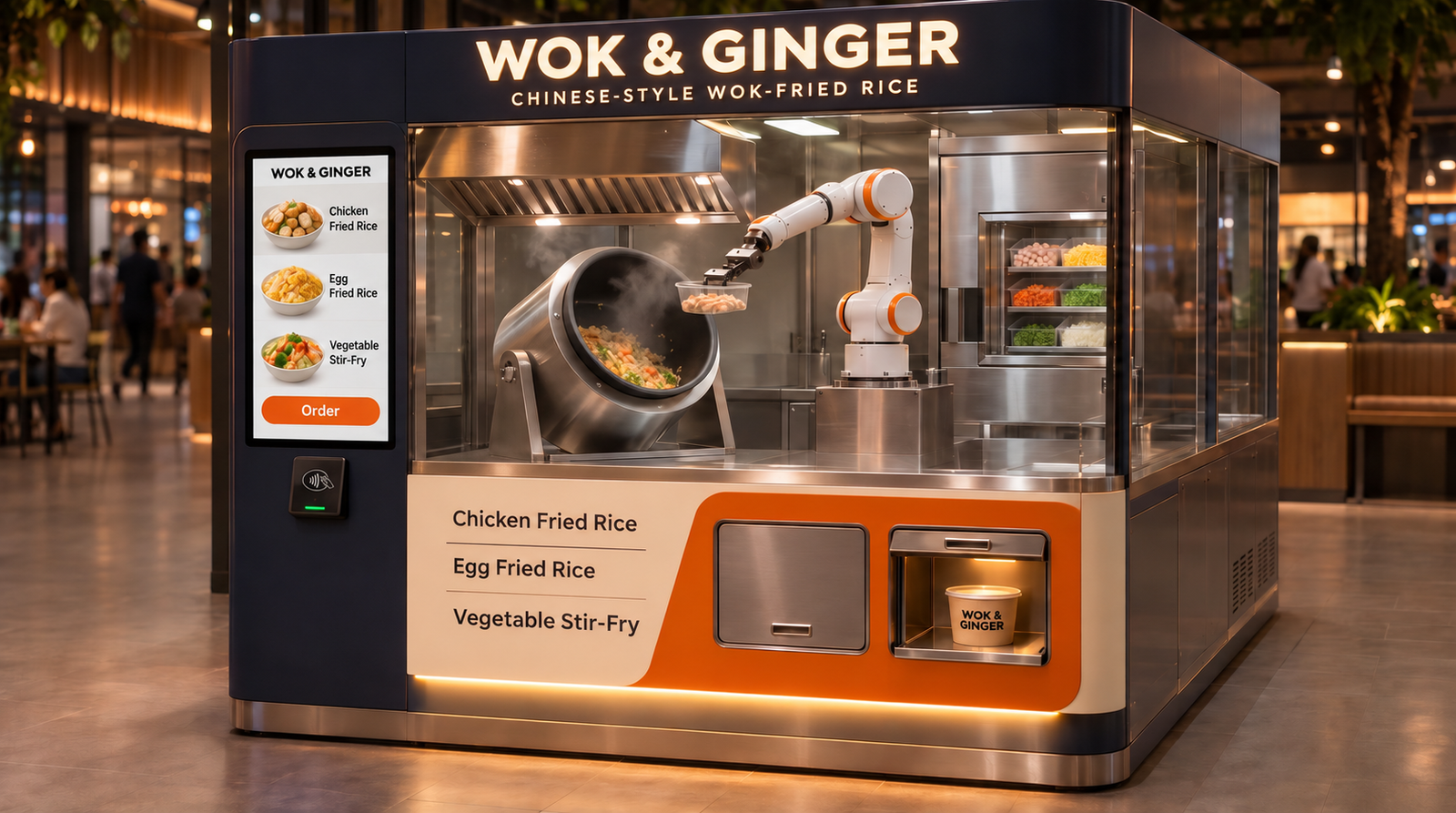
I’m developing a compact kiosk for cooking stir-fried rice to order in busy locations. The freezer at the back would be restocked overnight so the kiosk could serve orders throughout the day. A six-axis robot would sit in the middle, with the wok at the front so customers can see their meal being cooked.
A customer would place an order on a touchscreen. The freezer would open automatically, allowing the robot to use a purpose-built gripper to retrieve portions of pre-cooked frozen rice, chicken and vegetables. The robot would load the wok, and the station would add sauces during cooking. Once the meal is ready, the wok would turn back towards the robot for serving into a takeaway cup. The robot would hand the meal to the customer, and the wok would move into a cleaning position before the next order.
I’m also adapting the cooking setup for a mobile robotic stir-fry van.
The build so far
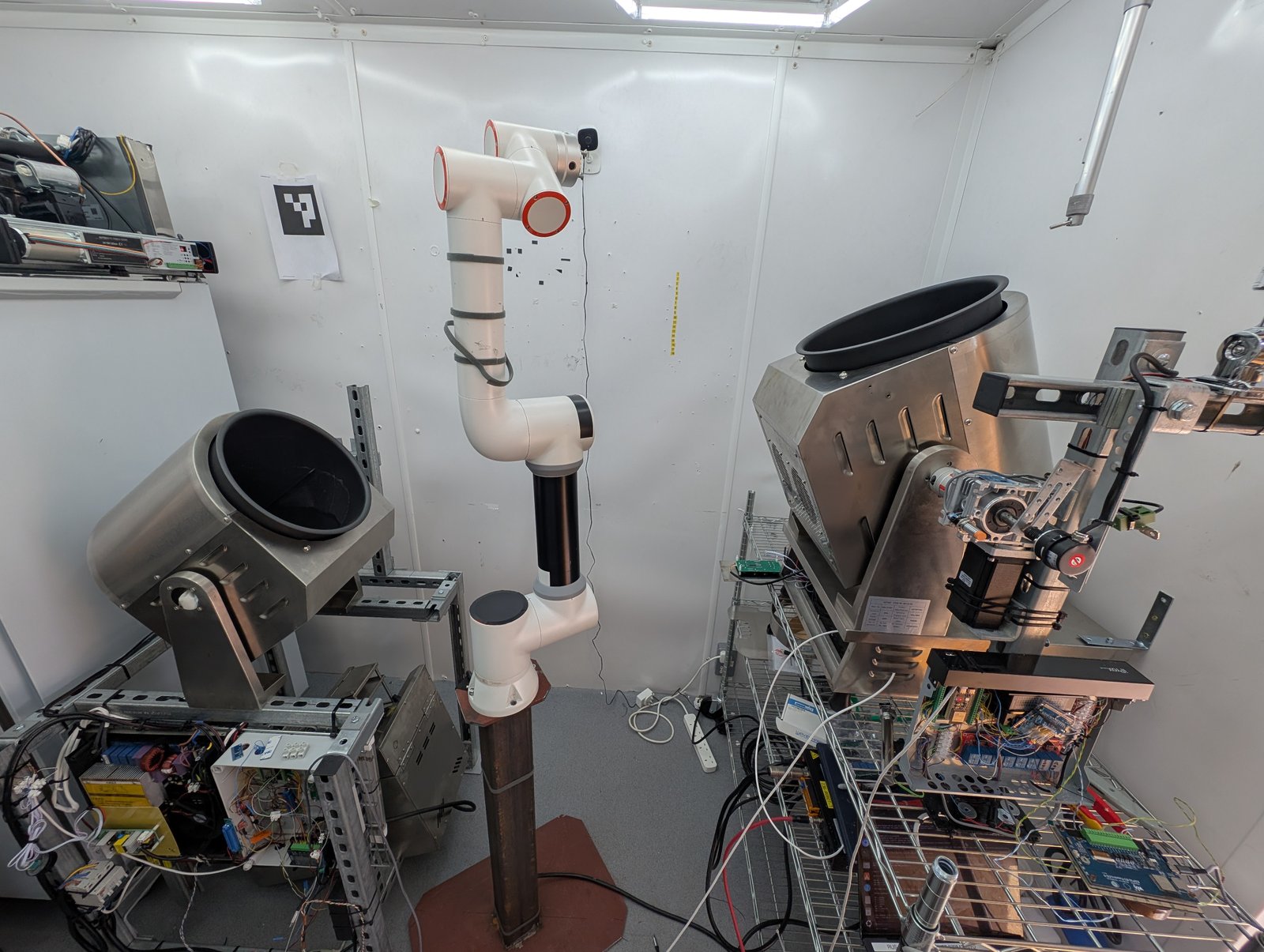
The prototype brings together a six-axis robot on its own stand and a custom cooking station with heating elements, temperature controls, relays and a beacon that signals the station’s operating state. One of my early builds used a standalone Unistrut frame. That setup didn’t work out, so I retired it and changed the mounting arrangement. I’ve also tested a table-rack setup.
An early control assembly brought the wok’s induction heat controls, temperature sensing and motor speed controls together on the frame. It also housed the microcontrollers, signal and display controls, power distribution and protective devices used during prototyping. The wok has separate controls for temperature, rotation speed and tilt angle, so I can adjust the settings for different dishes and ingredients.
A custom touchscreen
I wrote the touchscreen interface and its firmware for this prototype. The firmware runs directly on the controller hardware without an operating system and communicates with the station’s controls. The interface responds quickly, and I can change its layout, controls and displayed data as the prototype develops.
From the touchscreen I can set the tilt angle, rotation speed, temperature and heating power in watts. It also supports starting the wok, remote control and an emergency-stop control. The display shows the measured tilt angle, electrical voltage and historical readings, with reset information, diagnostics and event logs available for troubleshooting.
Controlling the tilt of a heavy wok
Tilting the heavy wok assembly was one of the hardest parts of the build. I used a heavy-duty stepper motor with a 50:1 gearbox to trade speed for more torque at the wok. The gearbox drives the tilt through a shaft and couplers.
The stepper can miss steps, so the angle the controller requests can differ from the wok’s actual angle. I added independent rotary encoders and mapped their readings to tilt angles so the controller can check the position directly. Software travel limits, proximity sensors and a separate hard-stop switch are part of the prototype’s travel-limit system. I’m testing how the drive and position feedback behave together.
Research and development phases
Current focus: wok controls and cooking trials. I’m developing cooking programs for different dishes and testing when each ingredient should go in, how long it needs to cook and which temperature and rotation speed work best. The phases below can overlap as testing reveals what needs to change.
Freezer storage and replenishment
Develop a rear freezer that can be restocked overnight and opened automatically during service. Work out how frozen portions are organised for retrieval and how the station will be replenished with ingredients and liquids.
Robot retrieval from the freezer
Develop the gripper, arm movements and control sequence for retrieving the right portions from the freezer and bringing them to the wok.
Loading ingredients into the wok
Test how the robot can empty portion cups reliably when it tips rice, vegetables or liquid egg into the wok. Explore a controlled shake or vibration to release what sticks. Cooking trials will also show whether the robot needs to stir with a utensil during the cycle.
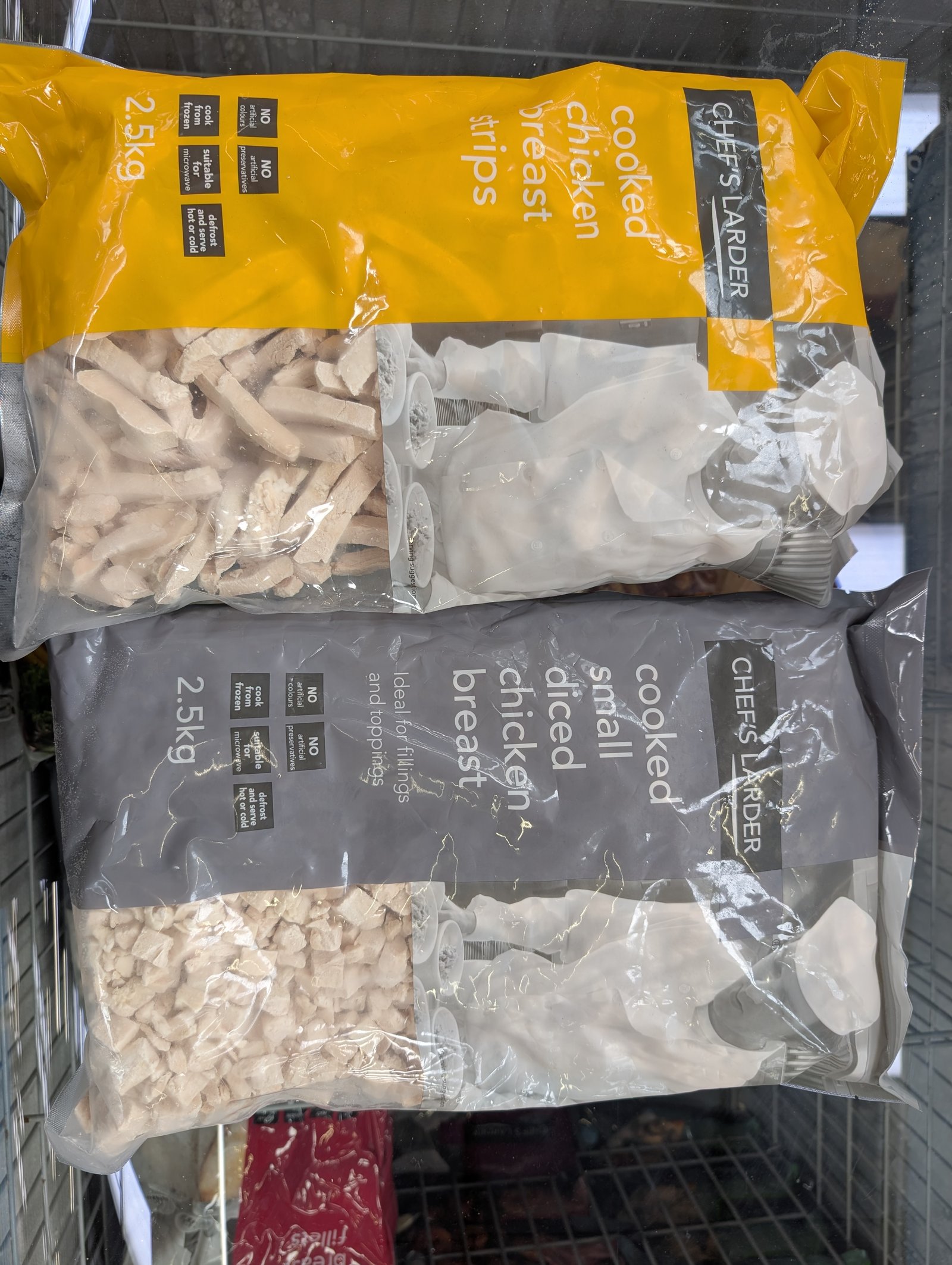
For fried rice, I’m comparing several ways to supply egg: liquid egg, pre-cooked egg chopped into small pieces and frozen, and pre-cooked frozen egg supplied in bags. Trials will help determine whether a format needs a separate thawing or warming step before loading, when to add it to the wok, and how it mixes into the rice. The same approach will help decide how to handle other ingredients that arrive in different forms.
Wok motion and cooking
The wok is the part customers would watch. The goal is a near-full-circle range of tilt. The wok would face the robot for loading, angle towards the customer during cooking, turn back towards the robot for serving, then tip farther down for cleaning. Testing covers heat accuracy, cooking results, rotation speed, tilt positions, position feedback and travel limits. In one fried-rice trial the rice overcooked and turned too dark. I’m reviewing cooking time, temperature and the sauce mix as variables for the next trials.
I’m testing recipes in stages, recording the order of ingredient additions, the time between them and the heat setting at each stage. The results will inform when the controller tells the robot to add the next ingredient and when it commands a change in wok temperature. One manual trial logs the preheat, the oil heating, how long the onions fry on their own and when the remaining ingredients go in.
In another session we cooked and plated a batch of fried rice for a taste test. We’re using those tastings to assess the finished dish alongside the timing and temperature data.
Operator touchscreen and controls
The custom firmware interface already reads live data from the wok and lets the operator control it directly during testing. The next stage is to use that interface alongside automatic recipe control so the operator can monitor the full cycle and intervene when needed. Map commands and status between the wok, robot and operator screen using interfaces such as Modbus RTU and Modbus TCP. Customers would order on a separate screen.
Oil and sauce dispensing
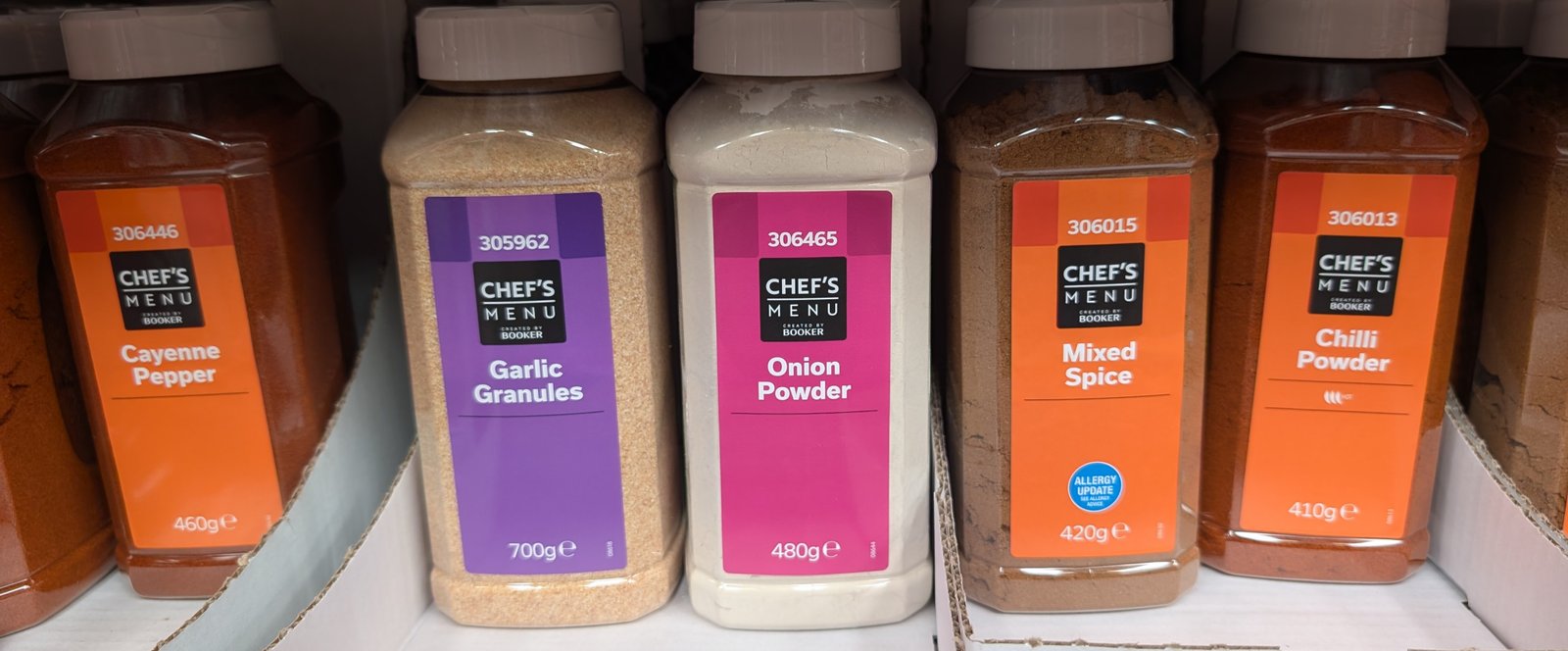
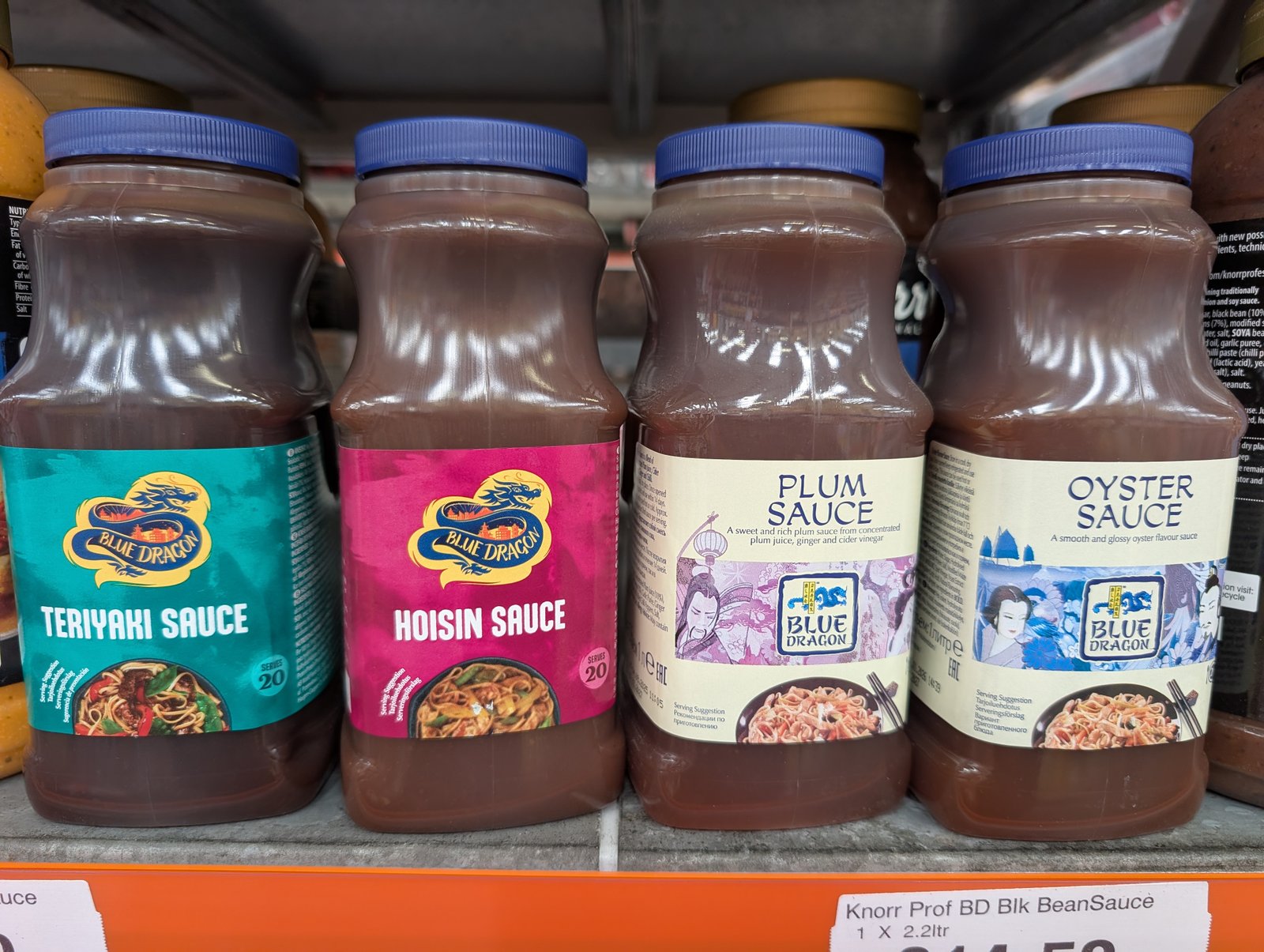
I’m testing a pre-blended master sauce by hand to see whether one mix can replace several individual sauce feeds. The trials look at thickness, when to add the mix, and how it behaves as it cooks in the wok. Candidate ingredients range from thinner sauces such as light soy sauce to thicker options such as hoisin, oyster sauce, sweet chilli sauce and chilli paste. Vegetable oil and sesame oil also need to be dosed.
Several pumps are already set up for the next round of trials. I’ll compare the amounts they deliver and how they handle thinner liquids and thicker blends, then look at cleaning cycles for sauce residue in the tubing and nozzles.
Serving into a takeaway cup
Getting the cooked food into the cup cleanly is an open challenge. Food can miss the cup or stay in the wok at the angles tried so far. In the same overcooked-rice trial, some of the portion stuck inside the wok during serving. I’m exploring whether a robot-held spatula could clear the wok or a funnel could catch a wider pour. A funnel would need space to park between uses and a way to clean off oil and food residue.
Cleaning and resetting the wok
Explore two options: a jet-wash tool the robot brings to the wok, or a wok that tilts down into a sink for spraying. The trials need to cover cleaning cycles for different gaps between orders, how the wok dries, and how food residue and wastewater are collected and removed.
Customer ordering and payment
Develop the customer touchscreen, point-of-sale and payment flow, and connect each order to the right cooking program and handoff.
Putting the kiosk together
An end-to-end demonstration would take a customer order through cooking, serving and cleaning. Once the design has been proven, I want to work with a manufacturer on a smaller version with a stainless-steel frame.